Two Steeples Medical Centre, 10 Abington Close, Wigston, Leicester. LE18 2EW
Telephone: 0116 288 2566
Sorry, we're closed

⭐️Please be aware we are closed from 1pm on Thursday 12th November 2026 for staff training. The surgery will reopen Friday 13th November 2026 at 8am as usual.⭐️
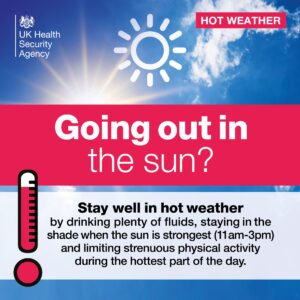
Going out in the sun?
Red heat health alert
The UK Health Security Agency (UKHSA) has issued a red heat health alert for the East Midlands, which is in effect this week from 1am on 24 June until 11pm on 25 June 2026. Very warm temperatures are expected throughout the week.
This is the second time a red heat health alert has been issued, the first having been issued in July 2022.
A red heat health alert indicates a risk to life for even the healthy population, but simple actions like staying hydrated, avoiding the sun during the hottest part of the day, and keeping your home cool can make a big difference. It’s also important to look out for others, especially elderly relatives, neighbours, and those with underlying health conditions, to make sure they are aware of the forecast and following the necessary advice.
UKHSA guidance on staying safe in hot weather is available online. There you can find a full list of the groups who are especially at risk, as well as advice on keeping yourself and others safe during periods of hotter weather, such as:
• keeping your home cool by closing windows and curtains in rooms that face the sun
• look out for those who may struggle to keep themselves cool and hydrated – older people, those with underlying conditions and those who live alone are particularly at risk
• stay cool indoors by closing curtains on rooms that face the sun – and remember that it may be cooler outdoors than indoors
• drink plenty of fluids and avoid excess alcohol
• never leave anyone in a closed, parked vehicle, especially infants, young children or animals
• check that fridges, freezers and fans are working properly
• try to avoid direct sunlight, especially between 11am and 3pm when UV levels are highest – if you do go outside, cover up with suitable clothing, such as an appropriate hat and sunglasses, and seek shade and apply sunscreen regularly
• walk in the shade, apply sunscreen and wear a wide-brimmed hat, if you have to go out in the heat
• avoid physical exertion in the hottest parts of the day
• make sure you take water with you if you are travelling
• take care and make sure to follow local safety advice if you are going into the water to cool down
• check medicines can be stored according to the instructions on the packaging
• if you are going to do a physical activity (for example, exercising or walking the dog), plan to do these during times of the day when it is cooler, such as the morning or evening – also check weather forecasts to see when it will be cooler
More information on common symptoms of heat exhaustion and heatstroke and what to do if you or someone else experiences them are available on NHS.
Opening Times
- Monday08:00am to 06:30pm
- Tuesday08:00am to 06:30pm
- Wednesday08:00am to 06:30pm
- Thursday08:00am to 06:30pm
- Friday08:00am to 06:30pm
- SaturdayCLOSED
- SundayCLOSED
Useful Links